

When a furnace fails on a freezing night, the first call can shape your customer relationship.
There’s no reliable national count of how many U.S. furnaces fail after hours. But the broader scale of HVAC repair demand is significant.
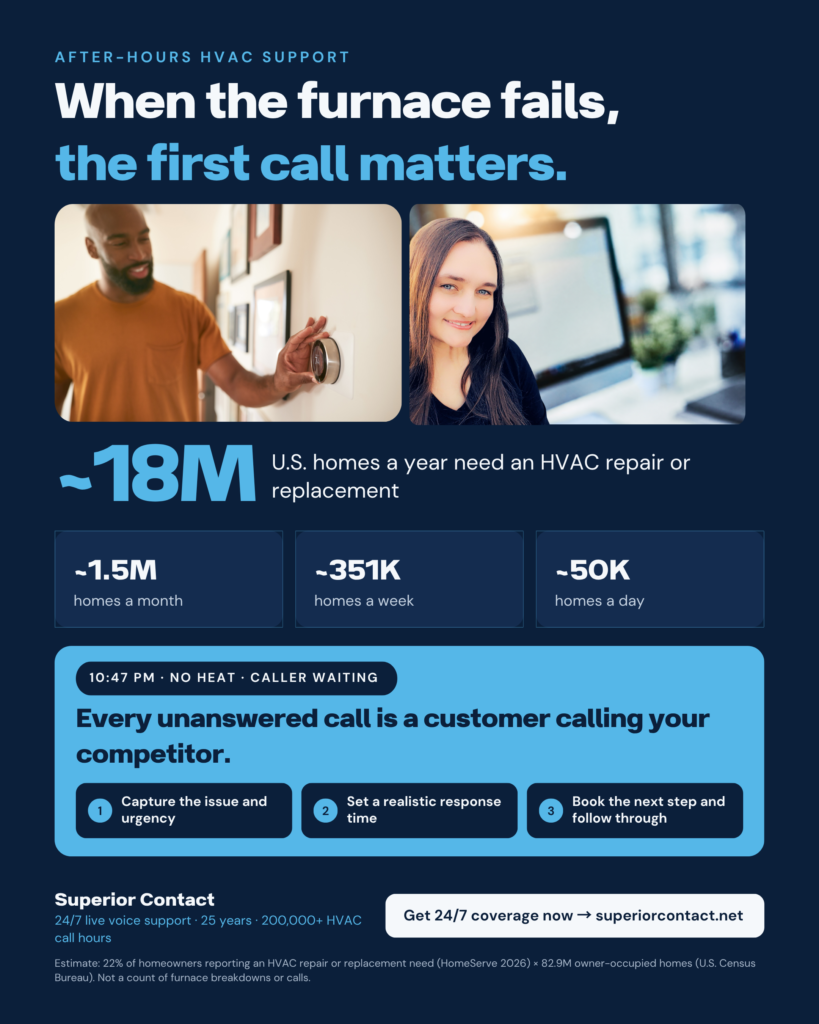
In HomeServe’s 2026 survey, 22% of homeowners said they needed an HVAC repair or replacement in the previous 12 months. Applied to the Census Bureau’s 82.9 million owner-occupied homes, that suggests roughly 18 million homes a year, an average of about 50,000 a day, 351,000 a week, or 1.5 million a month.
That is an estimate of reported HVAC repair or replacement needs, not a count of furnace breakdowns or calls. And the annual average masks the seasonal peaks when a cold snap puts extra pressure on both home heating systems and service teams.
For the homeowner, a failed furnace can mean a cold house, worried family members, and uncertainty about what to do next. For the HVAC company, the first call is a chance to bring calm and clarity:
- Capture the issue and urgency
- Set a realistic expectation for response
- Arrange the next step and follow through
Automation can help manage demand. But in a stressful moment, the experience still depends on whether the customer feels heard, understood, and supported.
With 25 years of industry experience and more than 200,000 hours handling HVAC calls, Superior Contact provides 24/7 live voice support for home-service businesses.
Where do your after-hours requests most often stall: response, scheduling, or follow-up?
Learn more: https://superiorcontact.net